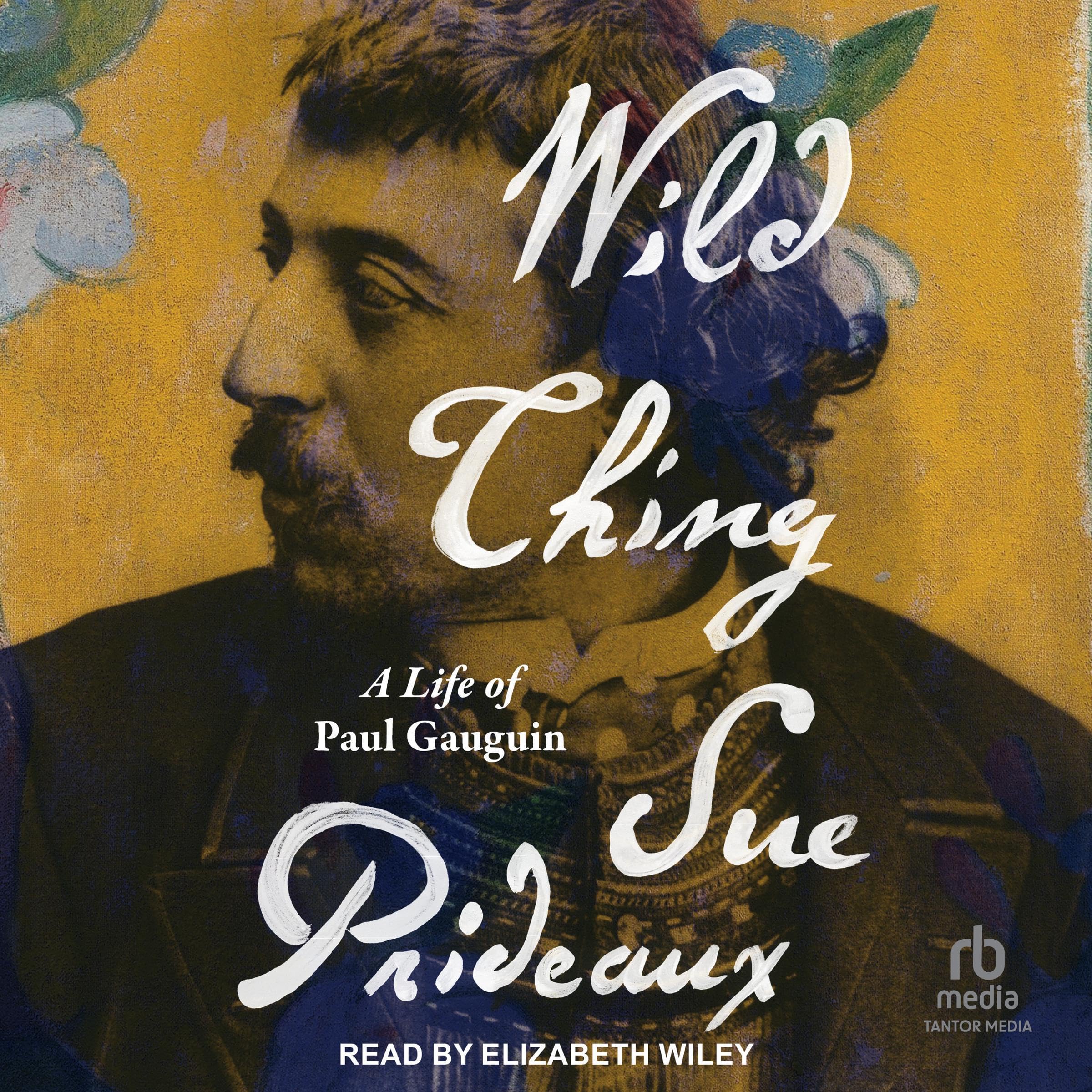
Wild Thing: A Life of Paul Gauguin
4.5 | 329 ratings
Price: 22.57
Last update: 12-03-2025
Top reviews from the United States
- tango1050Great Book!What a fascinating life! I had no idea... The book is well researched, well written, and a page turner. I read it cover to cover in record time.
- Michael R HooperRaw WildnessBy Michael Hooper
Wild Thing, A Life of Paul Gauguin, by Sue Prideaux, is an authentic biography of the French post-impressionist painter Paul Gauguin.
It’s a scholarly work, but also very readable. I read the book in a week. The book includes 59 images featuring the work of Paul Gauguin and Vincent van Gogh. The book covers Gauguin's development as a child in Peru, his youth in France and his work as a merchant marine, stock broker and artist.
Gustav Arosa, a patron of the arts and collector of realist and impressionist paintings, helped Gauguin get a job as a stock broker at a firm called Bertin in Paris.
Gauguin was living on his own terms for the first time in life and working at the French stock exchange called the Bourse.
The book says he was hired as a liquidateur, the 19th century equivalent of a futures broker gambling on the buying and selling of certain shares at a certain date in the future. He received a commission on each successful trade and received an annual bonus on his successes.
He enjoyed the Arosa household, the many beautiful paintings on the walls, and drawing with his daughter Marguerite, who herself would become a fairly successful artist in Spain and France. She took lessons from Camille Pissaro. Gauguin ended up taking a deeper and deeper interest in art during this time. He studied the old masters at the Louvre. He attended serious discussions about the latest advances in art and photography at the Arosa salon.
The book says another influence came from fellow clerk Emile Schuffenecker. Gauguin called him Schuff. Schuff had a passion for art. He had joined Bertin with the sole purpose of making enough money quickly to support himself for the rest of his life as an artist. Schuff dragged the evermore willing Gauguin to see what they were showing in these little art galleries surrounding the Bourse.
For 11 years, Gauguin was a successful businessman and stock broker who had gained an edge in figuring out the direction of stocks. He was making 30,000 francs per year, the equivalent of $145,000 annually, but he didn’t really save his money. He bought a lot of art and lived well. He and his wife Mette lived in Paris where he painted in the evenings and in his free time. He and his wife have five children over the next 10 years. Meanwhile, his friend Schuck was saving his money and getting ready to leave the brokerage business and become a full-time painter. Gauguin should have followed his example. When the stock market crashed in 1882 Schuck was ready for it, but Gauguin wasn’t. Business and art markets contracted. And that’s about the time that Gauguin decided to became a full-time painter.
When money was in short supply in Paris, wife Mette, looked for another way to raise their children and decided to move back to Denmark. In Copenhagen, she was able to teach French to students and make a small living. She also was a very independent woman who was highly regarded among the intellectuals and artist of the day. Indeed, she had maintained a salon in her apartment, which was full of all of these artworks that her husband had been collecting.
Gauguin tried working in Copenhagen, but returned to Paris to continue to learn to paint.
In the book, the author does not condemn Gauguin for leaving his wife and children to pursue art, yet I can’t help but feel sympathy for Mette, trying to raise five children. They had a robust sex life in their marriage, but after five children, she refused to have sex with him because she didn’t want any more children.
Yet Mette and Gauguin kept up with letters over the years between each other.
Gauguin fell in with the impressionist painters with Pissaro as a strong advocate for him.
Gauguin’s breakthrough painting was Woman Sewing in 1880. As a painter, I know it is difficult to draw and paint hands and face. In his painting, he draws the hands, face and body as one beautiful person, the skin tones seem real, and I like the mandolin hanging on the wall. His draftsmanship, colors and shading come together in a form of beauty.
His landscape paintings were considered dull and unimpressive. but he was willing to take risks to learn new tricks in the art trade.
Gauguin met Theo and Vincent van Gogh in Paris. Vincent wrote him several letters asking him to join him in Arles, France.
One detail that came up pretty prominently to me was how messy Vincent was in his house, leaving paint tubes all over the place with their lids off, drying out. Gauguin, knowing paint is expensive, put the lids back on.
The author captures the madness of Vincent van Gogh, and Gauguin’s fear of this madness. Eventually, at the end of his stay there, Vincent goes crazy and cuts off an ear and hands it to a prostitute.
Gauguin is interviewed by authorities over the bloody ear from Vincent. I think Vincent scared him. If Vincent would have died, Gauguin might have been charged with murder, according to the author.
People will pay hundreds of millions of dollars for Vincent van Gogh‘s paintings, but I question whether there is a single buyer of his art that would’ve actually taken the time to talk to the man because he was known as a dirty smelly man with mental health issues. Today if you see a dirty smelly man on the streets, are you going to take the time to talk to him?
Gauguin saw real talent in Vincent. Gauguin was willing to remain friends with him. They wrote letters to each other until Vincent van Gogh died.
French Polynesia
Gauguin’s fascination for French Polynesia increased as he read books by Pierre Loti, The pen name of Julian Viaud. His books told stories about meeting pretty girls at ports in places like Tahiti and Japan.
His fascination really took off after he attended the 1889 Exposition Universelle in Paris, featuring the new Eiffel Tower.
Tahiti had been a colony of France for about 10 years by the time Gauguin attended the expo in Paris. There were vast displays of many places that France had colonized around the world in Africa, the far east and Tahiti.
In Tahiti, the idea of raw and wild living appealed to Gauguin. Unfortunately, he found Tahiti to be already losing its traditions due to the importation of Catholic and Christian missionaries and French government appointed leadership.
The author does agood job discussing this paradoxical position in which Gauguin struggled because here he was an import from France and was trying to blend in with the local culture. He studied the language and he got along with the people, the locals were not really interested in his paintings.
He built himself a shack near the ocean and lived out his days, with a woman partner. He struggled with his health issues, sometimes bedridden, but he managed to paint many of the local people in his own strange and fascinating way.
He sent his paintings back to Paris for sale. He always looked forward to the boats arriving, hoping he would get some mail with some money, but often there was nothing there for him.
He needed a great deal of medical care and was in a lot of pain. He had wounds on his legs that would not heal. He died in his home from heart failure. He was 54.
In conclusion, I liked spending time with Wild Thing. Gauguin learned from other artists and crafted his own unique style. He changed up colors to create more dynamic paintings. He painted trees purple, and the earth orange. He was a bold swashbuckling painter with a background as a seaman. He could fence, he could use a sword. He attracted a following. Multiple artists lived with him and worked with him. Gauguin was their teacher, their guide.
Paul Gauguin inspires us to take chances, be bold, adventurous and creative. Try to capture the raw wildness of life. - JohnOne of my all-time favorite books. I highly recommend it.This book is incredibly well-written, compelling to read and made me appreciate and understand Gauguin and his art. I called my artist friends to tell them to buy this book and bought one for my artist sister-in-law. This book is a must read for all artists, not only to teach them about Gauguin, but to get a better understanding of how artists' connections with one another have an influence on their individual art. I love the huge amount of information about his family, his life, his connections with other artists and with the larger world. If I could, I would give this book ten out of ten stars.
- randel benceNew Insights on Gauguin.Love this new book on Gauguin with it's new information and insights. Read it twice madr me drive almost three hours to Buffalo, NY to see his famous painting Menao Tupapo.
- Kindle CustomerAn enjoyable readThis is well written. I find that it is not a heavy biography like many are, yet it is not a fluff piece. It was an enjoyable read.
- David RogowayVery interesting life storyExcellent book & well written on a damaged life
- Scott Von HolzenFascinating.I have a large collection of art books. Van Gogh exhibition books are always a pre-buy without hesitation. And because Gauguin and Vincent cross paths in a lot of my readings, I have always had some idea of him. But this book, change my stereotyping of Gauguin, detailing him in a more human way, then even the story of Van Gogh. I thought the lives of these two artists really contrasted. Gauguin exhibition books are now a must pre-order in the future.
- William A. HornePoor NarrationI wanted to listen to this highly rated book on Audible. When I listened to a sample, I found the narrator impossible to listen to. She had a high pitched unpleasant voice.