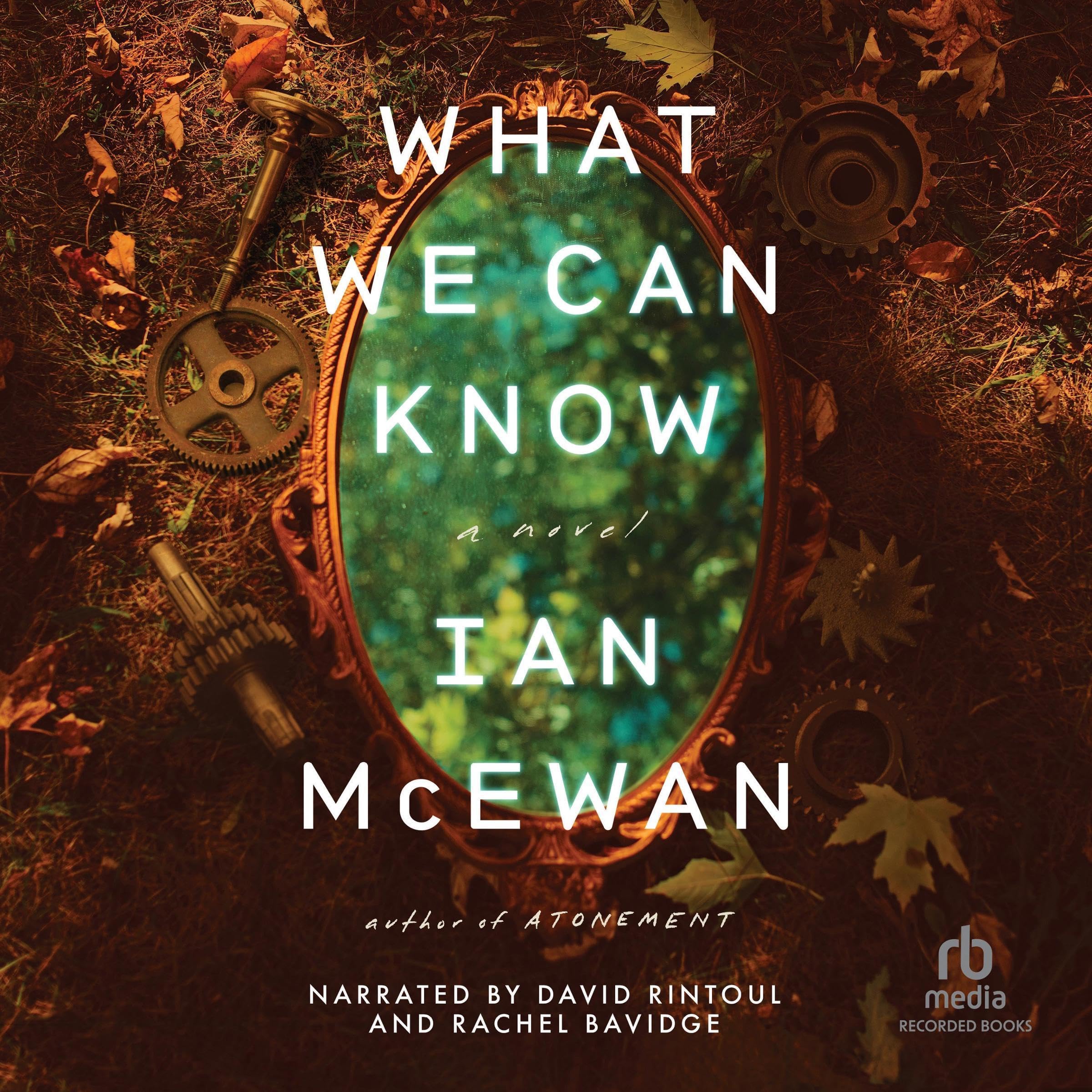
What We Can Know
4.4 | 2,140 ratings
Price: 15.02
Last update: 01-04-2026
Top reviews from the United States
- Digital RightsBelieve the positive comments.For me this is McEwan's best book. It is a compelling, provocative and enjoyable read. In 2119 Historian Thomas Metcalfe is living on island of what is then an archipelago of what remains of current day England. Global warming, successive nuclear wars and economic collapse leads to a population implosion, no air travel and a smaller but now relatively peaceful mundane life as a University instructor focusing on "90/30"; a looking at life from 1990 to 2030. McEwan creates this world with depth and thoughtful details that give a reader all sorts of insights to both their world and appreciation of riches in our own. Dystopian novels tend to do that anyway but in this one humanity remains. Thomas is obsessed with finding a poem written and read out loud by Francis Blundy to honor the birthday of his wife Vivian.
Thomas has access to almost infinite digital communication of the era. He can read even drafts of text or email messages. Quantum computing has broken down all encryption we learn. But he's frustrated or limited by the lack of real substance and can only use conjecture.
The novel is broken in 2. The first half is Thomas's search for material to complete his project; both the poem and more about the period. The second half is from another character's perspective and voice. The two halves make a whole. Many of the characters are very well presented and given full lives. Overall very entertaining and it gives some pause or drives home just a little bit that protecting our riches of today might be really worthwhile. - Hope SmithFairly hard to read but short enough to be worth itWorth the time, but fairly hard to read. Compelling story, set against interesting and timely topics, and structured to be non-linear but is actually sort of strung together in pieces that the reader must knit together into a narrative. Pretty good payoff at the end.
Sadly, the weird choice of typeface does not help the readability . - Lisa JasonMcEwan Never DisappointsThis book has been heralded as a masterpiece even though it has just been released. I could not wait to read it. Like much of McEwan’s work, it is wholly unique with nods to history and writing. The clarity with which he writes, woven with mystery and suspense are the masterful part. It is a gift to read such works by a living author. I will not write much more for fear of ruining any reader’s pure experience with this book. Suffice it to say, there is a slow build that keeps you reading with gaining interest as the structure and brilliance of this story are revealed.
- AnnetteA Literary Page-turnerThis was a surprisingly good read, sparkling with literary allusions and ideas. The first part had a humorous aspect: I thought "Jonathan Swift meets Malory," as the literary historian goes on a quest to find his Holy Grail -- a Corona written by a poet whose life he is studying -- and his matter-of-fact tone of voice, as he recounts what to a modern reader is a horrific world, reminded me of Swift's irony as Gulliver comments on the people he meets. But it's the second part of the novel that keeps you reading late into the night. The prose and story are both compelling, as Vivien solves all the mysteries Thomas the 2120 scholar confronted in Part 1. I also loved learning about the Corona poetic form, and about the John Fuller corona that inspired this novel, as mentioned in the "Acknowledgements" at the end of the book.
- Dale KutnickA meandering tale of love, and deceit across generationsThe story is framed around a mysterious (esoteric) literary work and a future research effort to unearth its contents. The novel focuses too much on mundane activities, trysts and conversations across 3 generations. It also presents and a dystopian future (due to cataclysmic climate change that has significantly altered the landscape and human conditions) and adaptation in the late 21st century. I found the future descriptions and struggles to be unrealistic, since the author posits widespread scarcities, esp around technologies (like solar, wind, batteries, AI, computers, etc) that can ameliorate many of the problems encountered.
- MLFInterestingThis was a fascinating look into a possible future. The story was more drawn out than necessary, but from my point of view, having lived 75 years and also appreciating poetry, this was well worth reading. The descriptions about the construction of the poem were too technical for me and I skipped over those parts. The interactions of the people were interesting, while most of the characters weren't especially appealing. In the end, I'm glad I read this.
- Karen S. WalkerA beautifully written important bookI loved this book, a great read set in two centuries, ours and the 22nd century. For me the heart of the book lies in our present century, the following century the logical denouement to all that has occurred in the 21st. Unless I’m projecting here, there’s a deep regret woven into the story of a planet in ruins, due to the selfishness and general myopia of the 21st century world; living on a planet that is slowly and then quickly destroyed by human-caused climate change and eventual global nuclear war. I also surmise there is biblical symbolism here too, represented by the flooded landscape in which the 22nd century narrator lives. Put succinctly, a flood has punished humanity for its sins, and a once great civilization lies literally buried beneath the water.
The two main characters from our century fall in love with each other, while betraying or using (abusing) friends and family. These two individuals have selfish and self-indulgent pasts even before they meet. The people they have betrayed (a wonderful, earthy husband, various loyal family members, a helpless infant) symbolize our beleaguered planet, taken for granted, taken advantage of when they’re needed.
This book brought home to me the trajectory we’re all on; like the two exalted, self-involved lovers, we indulge ourselves at the planet’s expense, not thinking of future generations who will have to deal the consequences.