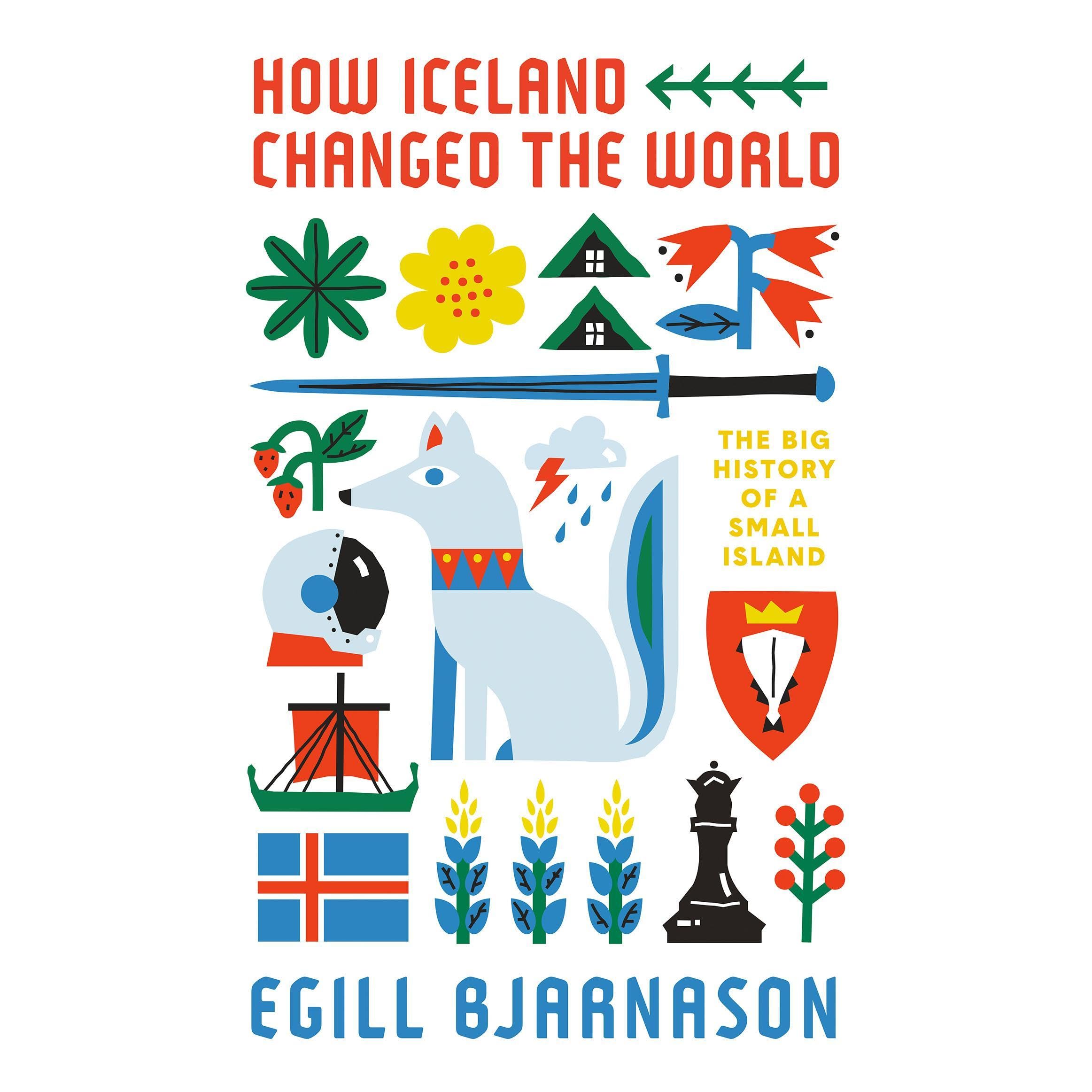
How Iceland Changed the World: The Big History of a Small Island
4.6 | 871 ratings
Price: 13.78
Last update: 11-30-2025
Top reviews from the United States
- SecondThoughtsAn Informative, clever and well-written work on how Iceland influenced world historyI came into this book knowing nothing much about Iceland other than Bjork, Sigur Ros, and something vague about an economic meltdown in 2008 and a volcano stopping air traffic in Europe once. This summer I visited Iceland and wanted to prepare. Being a student of history, I always want to read the history of a country I don’t know about before visiting. I was looking for something general and not too specialized since this would be my first crack at understanding Icelandic history. Egil Bjarnason’s “How Iceland Changed the Word: The Big History of a Small Island” not only delivers in detailing the history of Iceland to a general audience but also helps the reader understand how Iceland shaped world history in unusual ways. Thus, the book can be enjoyed not only by people wanting to know Icelandic history but also by those who are interested in world history. For instance, I specialized in modern Middle East history and politics in school and never knew about the role Iceland played in the Israel-Palestinian conflict. The book is a great example of how our understanding of world history can constantly change as we learn more about the histories of other obscurer countries. As far as whether the history of Iceland itself as presented in this book is accurate or not, I will leave it to the specialists to decide. Personally, it jived with what I read at museums in Iceland. My guide was also very impressed with my knowledge about Icelandic history when he told me about Iceland’s history, and this was the only book I read before my visit. The other joy of this book is the writing. Many of those whose first language is English couldn’t write this good. Mr. Bjarnason has a knack for storytelling, focusing on the right details, and keeping the reader’s interest. The author also does a good job of tying Iceland’s history to issues facing contemporary Iceland (such as alcoholism). He also has a great sense of humor and had me laughing throughout. I particularly liked that he was willing to poke fun at certain aspects of his nation’s history and culture.
Some interesting things I learned were, for example, how Icelandic was the second most important language in the medieval world outside of church Latin. If Old Norse had not been written down, we would never have this mythology and maybe not get Lord of the Rings (J.R.R. Tolkien knew Icelandic and based much of his work on Norse mythology.) Iceland has the world’s oldest parliament, the Alpingi. One constant theme in Iceland’s history is a high percentage of national heroes that are very bookish. From Arni Magnusson to Jon Sigurosson, most of Iceland’s national shapers have been very learned people and a bit eccentric as the author shows. The history of WW2 demonstrates once again the brilliance of Winston Church in terms of strategy. Mr. Churchill understood that if the Nazis took Iceland, then they would be closer to North America and able to launch an invasion of Canada. Iceland would also act as a base to aid the Allied Powers by getting around German U-boat attacks that were preventing armament of the UK. Thus, Britain led a begin invasion and occupation of Iceland during the war. The Iceland was then handed over to the United States (Iceland remained a NATO nation during the Cold War and to this day.)
Although it is mostly conjecture, the argument that a volcanic eruption in Iceland may have shaped world history including the French Revolution is interesting. Another constant theme in Iceland’s history is humans vs. nature. This reminds historians of the importance of understanding how the environment impacts historical events. In terms of Iceland’s history, the elements of nature seem to make the people more practical and less ideological than other nations (as one Prime Minister in the book suggests.) In terms of my area of study, I learned that Iceland led the UN-committee to solve the status of British Mandate Palestine. The reason Iceland was picked to lead was because it was one of the few “neutral” countries regarding the conflict. Lastly, the information about Iceland’s “gender equality” policies were interesting and hopefully can inform policy makers elsewhere. Iceland’s policies seem to not only be morally the right thing to do but also boost economic output and have made Iceland have an above-replacement birthrate. All and all, I thoroughly enjoyed this book. I give it 5 stars because it delivered. It presented the history of Iceland for a general audience and demonstrated how Iceland has shaped world history in not obvious ways. It is also clearly written, and the author has a great wit. - P. E. Bakertravels & ideas for IcelandEnjoyable read about an upcoming isolated island which is windy and cold.. seems like Iceland has been a part of many nations at one time.. today it is proud to be an international leader of women’s rights.. did not realize Bobby Fischer was buried on the island
- Jeff LarsenAn engaging ride through centuries of historyBjarnason's ability to bring history to life make this a great read. He revealed a much more interesting Iceland than I had imagined.
- VT JenGood High-level History about IcelandAlthough a bit slow at times, a great little high-level read about Iceland’s history ahead of a trip there.
- Veiga O'SickeyGreat history with humorSo good. History for dummies written very well. Extremely engaging
- L. BGood book, can be a little dense sometimesI really liked this book and read it before my 2024 trip to Iceland. It often really grabbed my attention and I'd walk away with great tidbits to share with my husband like an "Iceland history fact of the day." Some parts I skipped through as I felt it was more of an info dump than storytelling, but overall, a good book.
- Laurie WilliamsDelightful ReadThis is a brilliantly written book that is captivating and truly fun to read. I bought the book before traveling to Iceland and found it to be a wonderful guide to the history and culture of the country. I can’t wait for the next book from this author!
- Robert G YokoyamaI want to visit Iceland because of this book.Iceland has a welcoming spirit that can be seen in the island's people and history. Egill Bjarnason convinces me that Iceland has this spirit in his book.
People from 26 different nationalities live in the port town of Husavik. There is a Polish sushi chef, a German whale watching guide and a bodyguard from Kenya. The ethnic diversity of this town makes me believe that Iceland has a welcoming spirit.
Astronauts from NASA have been welcomed to Iceland to prepare from space missions. Neil Armstrong studied the volcanic craters and terrain of Iceland prior to his walk on the moon in 1969. There will be astronauts exploring the iron rich rocks of Iceland prior to a future flight to Mars.
Iceland has a history of welcoming Americans to the island. Bobby Fischer played a series of chess games in 1972. Fischer became life long friends with a Icelandic man named Saeni Palsson. This man served as his bodyguard. There is a tourist center honoring Bobby Fischer achievements as a chess champion.
Iceland does not have a military, but the island welcomed American soldiers to protect them during the second world war. Iceland has also been the host country for peace meetings between American and Soviet politicians. There have numerous beauty pageant winners from Iceland. I could be greeted by some of the world's most beautiful women if I visited Iceland. This knowledge makes Iceland more appealing and welcoming to me.