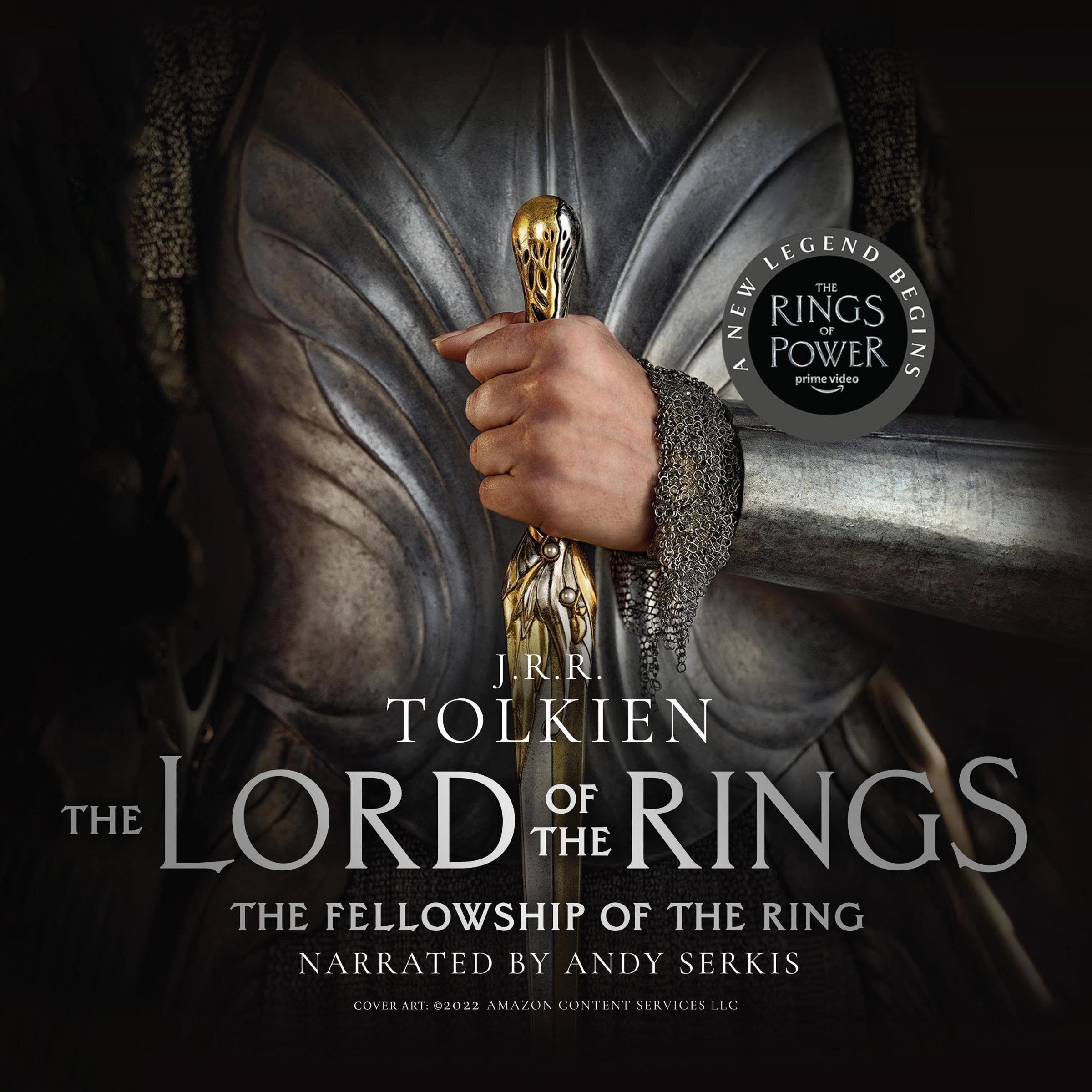
The Fellowship of the Ring: Lord of the Rings, Book 1
4.8 | 27,861 ratings
Price: 28.83
Last update: 01-12-2026
Top reviews from the United States
- BootsThe grand story by one of the great story tellers of our timesI read The Hobbit in I think 1964 when I was in third grade, and loved it. The next year, my dad bought the recently published paperback Lord of the Rings trilogy, and in an idle moment I picked up The Fellowship of the Ring. I read the entire trilogy right through including the annexes, started over at the beginning, read it again, and once again a third time. (Perhaps a fourth; memory tends to fade after 60 years.) I've read it again any number of times over the years, each time finding something new - even if it's just a word or short description that I had never bothered to really read before. The latest re-reading, which prompted me to write this review, was caused by the recent re-screening of the LOTR films on HBO-MAX. (The Peter Jackson films, by the way, are quite excellent even if they fall short of the rich complexity of the books. Such is film adaptation, though, and the screenwriters only made a couple IMO avoidable missteps.)
The story is perhaps a bit simplistic on the surface, Good vs Evil. Tolkien's world is so complete and compelling - to me, anyway - that it doesn't matter. He weaves a world- (or at least continent-) encompassing tapestry that to me comes alive every time I pick up the book.
I will note that LOTR seems to be a love it or leave it kind of book. About half my immediate family loves it, and the rest can't make it through more than a couple chapters. Most unfortunate for them! - David HoffmanGrew in the TellingThe tale grew in the telling, as Tolkien put it. The Lord of the Rings began as a sequel to Tolkien's successful children's book, The Hobbit. The early drafts of the story were written in the same lighthearted manner as the Hobbit in a style quite different from the stories of the Elves, posthumously published as the Silmarilion, that Tolkien considered his real life's work. Very soon, however, the tale took on a darker and grander tone. Tolkien's two worlds that briefly touched in the Hobbit, came together to produce the epic tale of the War of the Ring and the end of the Elder Days of the Eldar.
The Hobbit is a children's book that adults can enjoy. The Lord of the Rings is the book for those children who enjoyed the Hobbit who are now grown up. The Elves no longer sit in trees and sing silly songs. They are the Firstborn, ancient beings of great ability and nobility who have their own sorrows. The Dwarves become the noble Khazad, the Naugrim with a fierce loyalty to kin and friends and ever willing to fight for their rights. Gandalf grows from being a cantankerous conjurer to a mighty enemy of Sauron. Bilbo's ring of invisibility, which he used to avoid unpleasant callers, becomes the One Ring, whose wearer can obtain absolute power, at the cost of his soul. The Hobbits also grow in the course of the story. Bilbo Baggins began as little more than baggage at the beginning of The Hobbit., but emerged as a great hero by the end. Frodo and company are less helpless in the beginning of the Fellowship of the Ring, but they still need rescuing. The Hobbits are decidedly minor members of the Company of the Ring, at least until the end of the first book. . By the end of the story, they have grown great enough to stand with the wizards and warriors, yet their humbler perspective continues to be essential in bringing the story to the level of the reader. The Lord of the Rings told from the viewpoint of Gandalf or Aragorn would be a different, and more remote story.
Tolkien always disavowed any connection between the events in the Lord of the Rings and the real life events that occurred during its writing. I am not sure that I believe him. Tolkien did not consciously model the War of the Ring on World War II and Sauron was not based on Hitler, but I cannot imagine that a writer's life experiences wouldn't have great influence on his writings. In Tolkien's case, there seem to be certain themes in the Lord of the Rings that must have been based on Tolkien's own experiences in in both World Wars.
One theme repeated several times in the Fellowship is that it is the small and humble who do the real work of saving the world while the great have their minds on other things. While the elves, wizards and warriors fight desperately to save Middle Earth, it is the insignificant Hobbits whose acts of heroism save the day. The Hobbits do not want to be kings or win glory in battle. They do not really want to be the ones to save the world. All the Hobbits want to do is their part for Middle Earth and then go back to the Shire. As Sam might put it, they have a job to do. Surely, Tolkien based his Hobbits on the common British enlisted men who served under him in World War I. The generals and statesmen made great plans for reordering the world, but it was the courage of the ordinary soldiers who won the war.
There is also a deep sense of loss that pervades the Lord of the Rings. This is not so apparent in the Fellowship of the Ring, except in the chapters dealing with the elves, especially in Lothlorien. This feeling of loss, that much that is good in Middle Earth must pass away even if Sauron is defeated becomes especially poignant in The Return of the King so perhaps I should discuss it more in a review of that part of the trilogy. This feeling of loss, even in victory, must come from Tolkien's own experiences. In both world wars, Britain was victorious over German aggression, the good guys won, but after both wars Britain and the world was forever changed. In some ways, this change was for the better, yet much that was good about the prewar world was gone forever. By the time the Lord of the Rings was published in the 1950's, Tolkien might well have felt like one of his Eldar, living in a world that was no longer his.
The Fellowship of the Ring, then, is more than simply a fantasy, but a serious, though fun, story dealing with serious themes of plot and characterization. I am convinced that the Lord of the Rings will be one of the few books from the twentieth century still read centuries from now. - Amber DaybellBeautiful cover on a classic storyThis book is an amazing classic and so happy to have found such a stunning book for my shelf.
- AutumnA wonderful novel--I can't wait to read The Two Towers--a dense, enduring classic adventure--it was so much fun!Title: The Fellowship of the Ring
Author: J.R.R. Tolkien
Age Group: Adult
Genre: Fantasy/Classic
Series: The Lord of the Rings, book one
Star Rating: 4 out of 5 Stars
I bought an omnibus edition of this book and reviewed it.
I'll be honest: Tolkien and I haven't been on the best terms for a long time now. I bought this book ages ago, intending to read it, back in 2014, and I tried. Truly, I tried to take a stab at it. But it seemed muddled and heavy-handed to me, like a rock I was holding that was too heavy for me to lift. Add to that lots of intimidation and fear that I would hate it, because it is a classic, after all. Tolkien is essentially one of the modern fathers of fantasy. I got through to the second chapter on my first try and had to reshelve it. At the time, it seemed like too much to take on. Fast forward to a few days ago. My husband and I were standing in our living room, about to go visit friends. I was staring at my bookshelf thoughtfully. I tried choosing a few things, but I'd had no luck. So I turned to my husband for help. "I need something new to read. Help me?" He reached over to the bookshelf and plucked The Lord of the Rings off the shelf, putting it on the table. "How about this? You should try it."
Unable to resist the suggestion, I took it and began to read in earnest, and I'm so glad that I gave this book another chance. It took me a while to get past its sheer size and the language, but once I waded in, I could feel myself giving in to the story. And I really enjoyed it. It has the elements of every great story: rich mythology and worldbuilding, detailed descriptions of the setting, great characters, good and evil and everything in between. It also had breakneck pacing too, and I also loved the rich, constant history of Middle-Earth that served partially as a backdrop. It was pretty close to perfect, and here comes the unpopular opinion time in the review.
I didn't really like Frodo. I mean, I did. There were some parts of him that I really enjoyed: his sense of humor, his courage and bravery, his sheltered innocence, his kindness. But there were also parts of him that I didn't really enjoy: his tendency to lash out at his loved ones, his unfortunate habit of saying the occasional foolish things. But I suppose I should give poor Frodo some slack--every hero has flaws.
For me, though, my favorite character was and is by far, Samwise. I just love his patience and undying loyalty, and the way he loves his friends. He's definitely my favorite, with Aragorn, Pippin and Merry being close seconds. But nonetheless of Frodo's few qualms, I'm definitely invested for the adventure! Thanks to my wonderful husband for the suggestion! Next on deck: The Two Towers by J.R.R. Tolkien!